Tag: Healthy Skin

  • How do I choose the right skincare?

    Choosing skincare products can feel confusing because every product promises different benefits. However, healthy-looking skin starts with understanding your skin type, identifying your concerns, and selecting products that meet your needs. A good routine does not need dozens of products or expensive ingredients. If you are wondering, How do I choose the right skincare?, the best approach is to focus on your skin type, ingredient compatibility, product quality, and daily sun protection. With a simple, consistent routine, you can support your skin’s health and achieve a smoother, more radiant appearance over time.

    This guide from SkinHerbix explains how to select suitable skincare products, understand common ingredients, and build a practical routine for your skin.

    Why Choosing the Right Skincare Products Matters

    Your skin protects your body from environmental factors, including pollution and irritants. The right skincare routine helps maintain its protective barrier, manage dryness, and reduce unnecessary irritation.

    Using products that do not suit your skin may cause discomfort, clogged pores, dryness, or breakouts. For this reason, it is important to choose products according to your individual needs rather than following every skincare trend.

    A simple routine usually includes a gentle cleanser, a suitable moisturizer, and sunscreen during the day. Additional products can be introduced when you have a specific concern to address.

    How Do I Choose the Right Skincare for My Skin Type?

    Understanding your skin type is one of the first steps toward choosing suitable skincare products. Skin may be oily, dry, combination, normal, or sensitive. Your skin can also change with weather, age, and other environmental factors.

    1. Identify Your Skin Type

    Here is a simple guide to help you understand your skin’s needs.

    Oily skin: Your face may appear shiny, particularly around the forehead, nose, and chin. Choose lightweight, non-comedogenic products that are less likely to clog pores.

    Dry skin: Your skin may feel tight, rough, flaky, or uncomfortable. Look for gentle cleansers and moisturizers containing ingredients such as glycerin, ceramides, or hyaluronic acid.

    Combination skin: Some areas may feel oily while others remain dry. Use balanced products and adjust moisturizer application according to the needs of different areas.

    Normal skin: Your skin may feel comfortable without persistent excessive oiliness or dryness. Maintain this balance with gentle cleansing, moisturizing, and sun protection.

    Sensitive skin: Your skin may react to certain products with stinging, redness, itching, or burning. Choose fragrance-free formulas when appropriate and introduce new products cautiously.

    If you are uncertain about your skin type or experience persistent irritation, consult a qualified dermatologist.

    How Do I Choose the Right Skincare Ingredients?

    Once you understand your skin type, the next step is to read product labels. Ingredients can help you determine whether a formula is suitable for your skin concerns.

    2. Look for Ingredients That Match Your Needs

    Different skincare ingredients serve different purposes. Consider these commonly used options when comparing products.

    • Hyaluronic acid: Helps attract and retain moisture, making it useful in hydrating skincare products.
    • Glycerin: A humectant that helps draw water into the outer layers of the skin.
    • Ceramides: Help support the skin’s natural protective barrier and reduce moisture loss.
    • Niacinamide: May help improve the appearance of uneven skin tone, support the skin barrier, and manage excess oil.
    • Salicylic acid: Can help unclog pores and is commonly used in products for acne-prone skin.
    • Vitamin C: An antioxidant used in skincare to help improve the appearance of uneven pigmentation and support a brighter-looking complexion.

    Not every ingredient suits everyone. Start with products designed for your skin type, follow the label instructions, and patch-test new products before regular use. Avoid introducing several active ingredients simultaneously, especially if your skin is sensitive.

    For more ingredient and skincare education, explore SkinWise Daily.

    Choose Products According to Your Main Skin Concern

    Your skin type is important, but your primary concern also influences which products you should select.

    3. Select Skincare for Specific Concerns

    For acne-prone skin: Consider gentle cleansing and non-comedogenic moisturizers. Ingredients such as salicylic acid may help some people, but persistent or severe acne may require professional treatment.

    For dull-looking skin: Focus on consistent moisturizing, sun protection, and gentle cleansing. Ingredients such as vitamin C may help improve the appearance of uneven tone.

    For dry or dehydrated skin: Choose moisturizing products containing humectants and barrier-supporting ingredients. Applying moisturizer to slightly damp skin can help retain moisture.

    For uneven skin tone: Daily sunscreen is essential. Depending on your needs, ingredients such as niacinamide or vitamin C may be useful additions.

    For early signs of aging: Prioritize sunscreen and moisturizer. Some additional ingredients may help address specific concerns, but results vary depending on the product and individual.

    Remember that skincare results take time. Avoid expecting overnight transformations or using harsh products to speed up results.

    Read Labels and Check Product Quality

    A product’s marketing claims do not always tell you whether it is right for your skin. Read the ingredient list, directions, warnings, and expiry information before making a purchase.

    Look for products from reputable sellers and check packaging details where available. Avoid products that make unrealistic promises, such as permanently removing all pigmentation or guaranteeing flawless skin within a few days.

    If you shop online, review the product description, ingredients, intended use, and seller information. These steps help you make informed decisions and avoid purchasing products that do not meet your needs.

    Build a Simple Morning and Night Skincare Routine

    You do not need a complicated routine to care for your skin. Start with the essentials and add other products only when necessary.

    Morning Skincare Routine

    1. Cleanser: Use a gentle cleanser to remove excess oil and overnight buildup.
    2. Moisturizer: Apply a moisturizer suited to your skin type.
    3. Sunscreen: Choose broad-spectrum sunscreen with SPF 30 or higher. Reapply approximately every two hours when outdoors, and after swimming or sweating, following the product directions.

    Night Skincare Routine

    1. Cleanser: Remove sunscreen, makeup, dirt, and excess oil.
    2. Treatment product: If needed, use one suitable treatment according to its instructions.
    3. Moisturizer: Help keep your skin hydrated overnight.

    A consistent routine is often more practical than frequently switching products. Give new products time to demonstrate their effects, unless they cause irritation or another unwanted reaction.

    For additional guidance, read the American Academy of Dermatology’s advice on selecting skincare products.

    Common Skincare Mistakes to Avoid

    Even well-intentioned skincare habits can cause problems when products are used incorrectly. Avoid these common mistakes:

    • Buying products only because they are popular on social media.
    • Using too many exfoliating acids or active ingredients at once.
    • Skipping moisturizer because your skin is oily.
    • Ignoring sunscreen during daily outdoor activities.
    • Changing your routine too frequently to evaluate results.
    • Assuming natural or herbal ingredients cannot cause irritation.
    • Ignoring persistent redness, itching, burning, or breakouts.

    Choose products based on your needs rather than trends. If a product causes a persistent reaction, stop using it and seek professional advice when necessary.

    Frequently Asked Questions

    1. How do I choose the right skincare for beginners?

    Start by identifying your skin type and main concern. Choose a gentle cleanser, a suitable moisturizer, and broad-spectrum SPF 30 or higher sunscreen. Introduce additional products gradually as needed.

    2. Which skincare products should I use every day?

    Most basic routines can include a gentle cleanser, moisturizer, and sunscreen during the day. Your exact routine depends on your skin type, concerns, and tolerance.

    3. How can I identify my skin type at home?

    Observe how your skin feels after gently washing your face and allowing it to settle without applying products. Persistent shine may suggest oily skin, tightness or flaking may suggest dryness, and differences between areas may indicate combination skin. This is a general guide, not a medical diagnosis.

    4. Are herbal skincare products suitable for every skin type?

    Not necessarily. Herbal ingredients may offer useful skincare benefits, but suitability depends on the formula, concentration, and individual sensitivities. Natural ingredients can also cause allergic reactions or irritation, so review labels and patch-test new products.

    5. How long does it take to see skincare results?

    Hydration may improve the appearance and feel of skin relatively quickly. Concerns such as acne or uneven pigmentation may take several weeks or longer to improve. Results vary by ingredient, product, and individual. Stop using products that cause significant irritation.

    6. Where can I learn more about choosing skincare products?

    Visit SkinHerbix for skincare information and product discovery. You can also read educational resources from SkinWise Daily and consult the American Academy of Dermatology for dermatologist-reviewed guidance.

    Final Thoughts

    Choosing suitable skincare becomes easier when you understand your skin type, select ingredients according to your concerns, and follow a consistent routine. You do not need to buy every trending product to care for your skin.

    Prioritize gentle cleansing, effective moisturizing, daily sun protection, and careful product selection. Introduce new products gradually and seek professional advice if you have persistent skin problems.

    At SkinHerbix, our goal is to help you make more informed skincare choices for healthy-looking, well-cared-for skin.

    Ready to improve your skincare routine? Visit SkinHerbix to explore our website and discover skincare options that suit your needs.
  • How Can I Glow in 7 Days?

    If you’re wondering How Can I Glow in 7 Days?, the answer is not an overnight miracle product. A healthy-looking glow usually comes from consistent skincare, good hydration, sun protection, enough sleep, and habits that support your skin barrier. In one week, you may notice that your skin feels more hydrated, smoother, and fresher when you follow a simple routine consistently.

    The goal is not to change your natural skin color or achieve unrealistic perfection. Instead, focus on supporting your skin so it looks healthy, comfortable, and naturally radiant.

    How Can I Glow in 7 Days With a Simple Skincare Routine?

    A simple routine can make your skin look more refreshed within a week, particularly when dryness, dehydration, or inconsistent skincare is contributing to a dull appearance.

    Dermatologists generally recommend keeping skincare simple: cleanse gently, moisturize appropriately, and protect your skin from the sun. The American Academy of Dermatology also emphasizes gentle cleansing and daily broad-spectrum sunscreen with SPF 30 or higher.

    Day 1: Start With Gentle Cleansing

    Begin with a mild cleanser that suits your skin type. Avoid aggressive scrubbing, very hot water, and cleansers that leave your skin feeling tight.

    Cleanse in the morning and evening, or adjust the frequency if your skin is particularly dry or sensitive. Use your fingertips and gently pat your face dry rather than rubbing it.

    Day 2: Focus on Hydration

    Well-hydrated skin can look smoother and more plump. Apply a suitable moisturizer after cleansing, especially while your skin is slightly damp.

    Look for ingredients such as:

    • Hyaluronic acid
    • Glycerin
    • Ceramides
    • Panthenol
    • Squalane

    Choose products according to your skin type. Oily skin can still benefit from a lightweight moisturizer, while dry skin may prefer a richer cream.

    Day 3: Add Daily Sun Protection

    Sun protection is one of the most important steps for maintaining healthy-looking skin.

    Use a broad-spectrum sunscreen with SPF 30 or higher during the day. If you spend extended time outdoors, follow the product’s reapplication instructions and consider shade, protective clothing, and other sun-protection measures.

    Consistent sunscreen use can help protect against UV-related skin damage and the appearance of uneven pigmentation.

    Day 4: Avoid Over-Exfoliation

    Exfoliation can help remove surface buildup, but more is not necessarily better.

    Using strong exfoliating acids, scrubs, or several active ingredients at once can irritate your skin. Irritation may lead to redness, dryness, sensitivity, or a less even-looking complexion.

    If exfoliation is appropriate for your skin, introduce it gradually rather than trying multiple products during the same week.

    Day 5: Improve Your Sleep and Lifestyle Habits

    Skincare is only one part of healthy-looking skin.

    Aim for a consistent sleep schedule and stay adequately hydrated throughout the day. A balanced diet containing fruits, vegetables, protein, whole grains, and healthy fats can support overall health.

    Avoid smoking, and remember that stress-management habits such as walking, exercise, relaxation, or time away from screens can support general wellbeing.

    Day 6: Keep Your Routine Consistent

    By the sixth day, avoid the temptation to add several new products because you want faster results.

    Consistency is more useful than constantly changing your routine. Stick with gentle cleansing, moisturizer, sunscreen, and any targeted product that your skin already tolerates well.

    If you’re building a skincare routine from scratch, introduce new products one at a time whenever possible.

    Day 7: Check Your Skin and Continue

    At the end of the week, look for practical improvements rather than perfection.

    Your skin may feel:

    • More hydrated
    • Softer and smoother
    • Less dry or tight
    • Fresher-looking
    • More comfortable
    • More radiant

    However, concerns such as acne, dark spots, fine lines, and uneven pigmentation generally require more time and consistent care. Seven days can be a useful starting point, but healthy skin is a long-term process.

    What Ingredients Can Help Your Skin Look More Radiant?

    The right skincare ingredients depend on your skin type and concerns. Some commonly used ingredients include:

    Hyaluronic Acid for Hydration

    Hyaluronic acid is a popular humectant that helps attract and retain water, making it useful in hydrating skincare products.

    Niacinamide for a Balanced-Looking Complexion

    Niacinamide, a form of vitamin B3, is commonly used in skincare formulas designed to support the skin barrier and improve the appearance of uneven-looking skin.

    Vitamin C for Bright-Looking Skin

    Vitamin C is widely used in antioxidant skincare. A properly formulated vitamin C product may be useful for people concerned about dullness and uneven-looking skin.

    If you have sensitive skin, introduce active ingredients gradually and stop using a product if it causes persistent irritation.

    How Can I Glow in 7 Days With Better Hydration?

    Hydration is an important part of achieving healthy-looking skin. Use a moisturizer that matches your skin type and consider ingredients such as hyaluronic acid, glycerin, ceramides, and panthenol.

    Drinking enough fluids throughout the day also supports overall hydration. However, drinking excessive amounts of water will not automatically make your skin glow.

    How Can I Glow in 7 Days With Sunscreen?

    Daily sun protection should be an essential part of your skincare routine. Apply a broad-spectrum sunscreen with SPF 30 or higher during the day, particularly when you will be exposed to sunlight.

    Consistent sun protection helps protect your skin from UV-related damage and supports a more even, healthy-looking complexion. For additional skincare information, you can also explore Skin Wise Daily.

    How Can I Glow in 7 Days With Healthy Habits?

    Skincare products are only one part of healthy-looking skin. Getting enough sleep, eating a balanced diet, staying hydrated, exercising regularly, and managing stress can all support your overall wellbeing.

    If your skin looks dull because of dryness, dehydration, or inconsistent skincare, improving these daily habits may help your complexion look fresher.

    How Can I Glow in 7 Days Without Damaging My Skin?

    The safest approach is to avoid aggressive shortcuts.

    Do not rely on lemon juice, baking soda, toothpaste, harsh scrubs, or untested DIY mixtures to brighten your face. “Natural” does not automatically mean gentle or suitable for facial skin.

    Instead, prioritize a gentle cleanser, moisturizer, sunscreen, adequate hydration, sleep, and a routine you can maintain. This approach supports your skin barrier rather than repeatedly stressing it.

    Morning Routine for Healthy, Glowing-Looking Skin

    A simple morning routine can be:

    1. Gentle cleanser
    2. Hydrating serum, if suitable
    3. Moisturizer
    4. Broad-spectrum SPF 30+ sunscreen

    Apply products gently and give each layer enough time to settle before applying makeup.

    Night Routine for a Fresh, Radiant Complexion

    Your evening routine can be equally simple:

    1. Remove makeup and sunscreen.
    2. Cleanse gently.
    3. Apply a suitable treatment product if needed.
    4. Moisturize.
    5. Get adequate sleep.

    Your nighttime routine should focus on cleansing away the day’s buildup and maintaining hydration rather than using numerous strong active ingredients.

    Skin Type Matters When Building a Glow Routine

    Dry Skin

    Choose gentle, hydrating products and focus on ingredients such as ceramides, glycerin, and hyaluronic acid. Avoid excessive cleansing and frequent harsh exfoliation.

    Oily Skin

    Look for lightweight, non-comedogenic skincare products. Oily skin still needs moisturizer, and excessively stripping the skin can cause irritation.

    Combination Skin

    Use a balanced routine that provides hydration without making oilier areas feel heavy. You may need different textures for different areas of your face.

    Sensitive Skin

    Keep your routine simple. Fragrance-free and gentle formulas may be easier to tolerate. Introduce new products gradually and patch test when appropriate.

    Common Mistakes That Can Stop Your Skin From Looking Healthy

    Trying too many products at once can make it difficult to identify what is irritating your skin.

    Other common mistakes include:

    • Skipping sunscreen
    • Scrubbing the face aggressively
    • Over-exfoliating
    • Using products unsuitable for your skin type
    • Constantly changing your skincare routine
    • Picking or squeezing blemishes
    • Expecting immediate results from every product
    • Following viral DIY skincare remedies without checking their safety

    A consistent, uncomplicated routine is often easier to maintain and monitor.

    When Should You See a Dermatologist?

    If you have persistent acne, painful breakouts, unexplained redness, severe dryness, recurring irritation, or pigmentation that concerns you, consider speaking with a qualified dermatologist.

    Professional advice can help identify the underlying cause and determine which treatments are appropriate for your skin.

    Frequently Asked Questions

    Can I really glow in 7 days?

    You may notice improved hydration, softness, and a fresher-looking complexion within seven days if dryness or inconsistent skincare has been affecting your appearance. However, significant changes in acne, pigmentation, scars, or skin aging usually take longer.

    What should I use for glowing skin in one week?

    Start with a gentle cleanser, suitable moisturizer, and broad-spectrum SPF 30+ sunscreen. Depending on your skin type and concerns, you can consider a suitable hydrating or antioxidant serum.

    How much water should I drink for glowing skin?

    Drink enough fluids to stay properly hydrated according to your individual needs, activity level, climate, and health circumstances. Drinking excessive amounts of water does not guarantee glowing skin.

    Is sunscreen necessary for glowing skin?

    Yes. Daily sun protection is an important part of maintaining healthy-looking skin. The American Academy of Dermatology recommends broad-spectrum sunscreen with SPF 30 or higher.

    Can I use lemon on my face to brighten my skin?

    It is better to avoid applying lemon juice directly to your face. DIY acidic ingredients can irritate the skin and may worsen certain pigmentation concerns.

    What should I avoid if I want radiant skin?

    Avoid aggressive scrubbing, excessive exfoliation, untested DIY remedies, and using multiple new active ingredients at the same time. Choose gentle products that suit your skin type.

    Final Thoughts on How Can I Glow in 7 Days

    If you are asking how can I glow in 7 days, focus on realistic and healthy improvements rather than overnight transformation. A simple skincare routine, regular hydration, daily sunscreen, adequate sleep, and healthy habits can help your skin look fresher and more radiant.

    Seven days can be a good starting point, but maintaining healthy-looking skin requires consistent care over time.

    Ready to build a simple skincare routine? Explore SkinHerbix for skincare products designed to support healthy, glowing-looking skin and choose products according to your skin’s needs.

  • Best Clean & Kind Skincare Brand in Pakistan

    Finding the Best Clean & Kind Skincare Brand in Pakistan involves more than choosing attractive packaging or following the latest beauty trends. Instead, good skincare starts with thoughtful formulations, suitable ingredients, transparent product information, and a routine that supports your skin barrier.

    Whether your skin is oily, dry, combination, normal, or sensitive, gentle skincare products can help you create a consistent routine. At the same time, choosing products according to your individual needs can prevent an unnecessarily complicated skincare routine.

    At SkinHerbix, our goal is to make skincare easier to understand through practical education, thoughtful product choices, and simple routines designed to support healthy, naturally glowing skin.

    What Makes the Best Clean & Kind Skincare Brand in Pakistan?

    The phrase Best Clean & Kind Skincare Brand in Pakistan should not be judged only by marketing claims. Instead, consider the information behind each product and determine whether its formulation and intended use are appropriate for your skin.

    A trustworthy skincare brand should make important product information easy to understand, including:

    • Ingredients included in the formula
    • The purpose of the product
    • Suitable skin types
    • Recommended usage
    • Suggested frequency of application
    • Relevant precautions
    • Customer support information

    Furthermore, ingredient transparency can help customers make more informed decisions. A product described as “natural,” “herbal,” or “clean” is not automatically suitable for every person or skin type.

    For this reason, look at the complete formulation instead of relying on a single marketing term. The American Academy of Dermatology also recommends keeping skincare practical because using too many products may increase the possibility of irritation.

    Why Clean and Gentle Skincare Matters

    Clean skincare is often associated with simpler formulations and mindful ingredient choices. However, the term “clean” does not have one universally accepted definition across the skincare industry.

    Rather than choosing a product simply because it carries a clean-beauty label, consider its complete formulation, your skin type, and your specific concerns. In addition, reading the product information can help you understand how the formula is intended to be used.

    For example, people with sensitive skin may prefer products that minimize potential irritants such as added fragrance. According to the American Academy of Dermatology, fragrance-free products may be a suitable consideration for people who are prone to irritation.

    Gentle Skincare for Different Skin Types

    Your skin type plays an important role when selecting skincare products. Therefore, understanding your skin can make it easier to build a suitable routine.

    Dry skin: Choose hydrating and moisturizing ingredients while avoiding unnecessarily harsh cleansing.

    Oily skin: Lightweight, non-comedogenic products may feel more comfortable. In addition, gentle cleansing can help avoid excessively stripping the skin.

    Combination skin: A balanced routine can address oily and dry areas without over-treating either one.

    Sensitive skin: Keep your routine simple and introduce new products gradually. This approach can also make it easier to identify a product if irritation occurs.

    Normal skin: Focus on maintaining hydration, cleansing appropriately, and protecting your skin from UV exposure.

    How to Choose a Clean Skincare Brand in Pakistan

    When searching for the Best Clean & Kind Skincare Brand in Pakistan, use a practical checklist instead of relying entirely on advertisements or social media recommendations.

    First, review the ingredients and product information. Next, consider whether the product suits your skin type. Finally, check the directions, precautions, and other information provided by the brand.

    1. Check the Ingredient List

    Understanding skincare ingredients can help you make more informed purchasing decisions. Common ingredients include:

    • Niacinamide for supporting a balanced-looking complexion
    • Hyaluronic acid for hydration
    • Ceramides for supporting the skin barrier
    • Vitamin C for antioxidant skincare routines
    • Salicylic acid for oily and blemish-prone skin
    • Aloe vera for soothing and hydrating formulations

    However, the presence of one popular ingredient does not determine whether an entire product is right for you. Instead, consider your skin type, concern, and the complete formulation.

    2. Look for Transparent Product Information

    A reliable skincare brand should provide useful information rather than depending entirely on vague claims.

    Before purchasing, check the product description, ingredient list, directions, size, intended skin type, and relevant precautions. Moreover, clear information allows customers to understand how a product can fit into their existing routine.

    As a result, transparency can help customers make more informed skincare decisions and understand what they are purchasing.

    3. Choose Products According to Your Skin Type

    There is no single skincare routine that works exactly the same way for everyone.

    For instance, a moisturizer that feels comfortable on dry skin may feel heavy on oily skin. Similarly, an active ingredient that works well for one person may cause irritation for another.

    Therefore, personalized product selection is generally more useful than blindly following viral skincare trends. Instead, choose products according to your skin type, concerns, and routine.

    4. Keep Your Routine Simple

    More products do not necessarily mean better skin. In fact, a complicated routine may make it harder to identify which product is causing irritation.

    The American Academy of Dermatology recommends a simple foundation of cleansing, moisturizing, and sun protection. It also advises against using excessive numbers of skincare products because they may irritate the skin.

    A simple routine can include:

    Morning

    1. Gentle cleanser
    2. Suitable serum, if needed
    3. Moisturizer
    4. Broad-spectrum sunscreen

    Evening

    1. Gentle cleanser
    2. Targeted treatment, if appropriate
    3. Moisturizer

    Additionally, dermatologists recommend applying skincare products in an appropriate order. Generally, cleansing comes first, followed by treatments and then moisturizer and/or sunscreen.

    Best Clean & Kind Skincare Brand in Pakistan: What Should You Expect?

    When evaluating the Best Clean & Kind Skincare Brand in Pakistan, look beyond popularity and social media presence.

    Instead, consider whether the brand provides clear product descriptions, understandable ingredient information, appropriate usage instructions, and accessible customer support.

    Useful signs include:

    • Clear product descriptions
    • Ingredient information
    • Straightforward usage instructions
    • Options for different skin types
    • Accessible customer support
    • Consistent product information
    • Educational skincare content
    • Clear communication about product benefits

    At SkinHerbix, we believe healthy-looking skin starts with informed choices and a consistent routine rather than complicated beauty trends.

    Visit SkinHerbix

    Key Ingredients to Look for in Gentle Skincare Products

    Ingredient selection should always depend on your individual skin needs. Fortunately, several commonly used skincare ingredients can support different skincare goals.

    Hyaluronic Acid

    Hyaluronic acid is widely used in skincare products designed to support hydration. For this reason, it can be found in many serums, moisturizers, and other hydrating formulations.

    Niacinamide

    Niacinamide is another popular skincare ingredient. It is commonly included in products designed for concerns such as excess oil, uneven-looking skin tone, and overall skin appearance.

    Ceramides

    Ceramides are lipids naturally associated with the skin barrier. Therefore, moisturizers containing ceramides may be useful when the goal is to support skin hydration and barrier function.

    Vitamin C

    Vitamin C is commonly used in antioxidant skincare products. In addition, it is often included in routines focused on brighter and more even-looking skin.

    Salicylic Acid

    Salicylic acid is frequently used in products formulated for oily or blemish-prone skin. However, stronger or frequent use may cause irritation for some people. Therefore, always follow the product’s directions carefully.

    Why Sunscreen Is Essential for Healthy Skin

    A gentle skincare routine is incomplete without appropriate sun protection.

    The American Academy of Dermatology recommends broad-spectrum sunscreen with SPF 30 or higher, particularly when spending time outdoors. Consequently, sunscreen remains an important part of a daily skincare routine.

    Regular sun protection can help reduce UV-related skin damage and support healthy-looking skin. For a simple daytime routine, apply sunscreen as the final skincare step before makeup.

    In addition, AAD guidance recommends applying sunscreen after other skincare products.

    Clean Beauty vs. Natural Skincare: What’s the Difference?

    The terms clean beauty, natural skincare, organic skincare, and herbal skincare are often used in marketing. Nevertheless, these terms do not necessarily mean the same thing.

    For example, a product containing botanical ingredients is not automatically suitable for sensitive skin. Likewise, a synthetic ingredient is not automatically harmful simply because it is synthetic.

    Instead, evaluate the complete formulation, intended use, ingredient information, and your personal skin needs. This ingredient-focused approach can help you make more informed decisions rather than choosing products based only on labels.

    How to Build a Simple Skincare Routine in Pakistan

    Pakistan’s climate can vary considerably by season and location. As a result, heat, humidity, dust, indoor environments, and sun exposure may influence how your skin feels.

    Fortunately, your routine can still remain simple and practical.

    Morning Skincare Routine

    Step 1: Cleanse

    Start with a gentle cleanser to remove overnight oil and buildup.

    Step 2: Treat

    Next, add a serum only if you have a specific skincare goal.

    Step 3: Moisturize

    After treatment, choose a moisturizer suited to your skin type.

    Step 4: Protect

    Finally, apply broad-spectrum SPF 30 or higher when appropriate.

    Night Skincare Routine

    Step 1: Cleanse

    First, remove sunscreen, makeup, dirt, and excess oil.

    Step 2: Treatment

    After cleansing, use your selected treatment according to its product instructions.

    Step 3: Moisturize

    Finally, apply a moisturizer to support comfortable, hydrated skin.

    Overall, a consistent routine can be easier to maintain than a complicated collection of products. AAD guidance also recommends gentle cleansing and generally advises limiting face washing to twice daily and after heavy sweating.

    SkinHerbix: Making Skincare Simpler

    At SkinHerbix, skincare is about combining mindful product selection with practical education.

    Rather than encouraging unnecessarily complicated routines, our approach focuses on helping customers understand skincare products, ingredients, skin types, and everyday skincare habits.

    Whether you’re searching for skincare products in Pakistan or building a simple routine for healthy, glowing skin, choosing products based on your actual skin needs can make your routine easier to maintain.

    Shop SkinHerbix Skincare

    Frequently Asked Questions

    What is the Best Clean & Kind Skincare Brand in Pakistan?

    There is no single skincare brand that is objectively best for every person. Instead, consider product formulation, ingredient transparency, skin type, individual concerns, and how well the products fit your routine.

    What Does Clean Skincare Mean?

    Clean skincare is a marketing term that can have different meanings between brands. Therefore, instead of relying only on the word “clean,” check the complete ingredient list, product information, intended use, and your individual skin needs.

    Is Natural Skincare Always Better for Sensitive Skin?

    Not necessarily. Natural or botanical ingredients can still cause irritation or allergic reactions in some people. If your skin is sensitive, introduce new products carefully and consider fragrance-free options when appropriate.

    How Many Skincare Products Do I Really Need?

    A simple routine can be enough for many people. Generally, a basic routine includes a gentle cleanser, moisturizer, and sunscreen. Additional products can then be added according to specific skincare concerns.

    What SPF Should I Use Every Day?

    The American Academy of Dermatology recommends choosing a broad-spectrum, water-resistant sunscreen with SPF 30 or higher.

    American Academy of Dermatology – Sunscreen & Skin Care Guidance

    How Should I Introduce a New Skincare Product?

    Introduce one new product at a time and follow its directions. This method makes it easier to identify which product may be responsible if your skin develops irritation.

    If you experience persistent irritation, swelling, severe redness, or another concerning reaction, discontinue the product and seek advice from a qualified healthcare professional.

    Where Can I Learn More About Proper Skincare?

    For dermatologist-backed general skincare information, the American Academy of Dermatology provides educational resources covering cleansing, moisturizing, sunscreen, acne, sensitive skin, and other skincare topics.

    Final Thoughts

    Choosing the Best Clean & Kind Skincare Brand in Pakistan involves more than looking at a catchy label or social media popularity. Instead, consider transparent product information, appropriate ingredients, clear usage instructions, and products that match your skin type.

    Furthermore, a consistent routine built around gentle cleansing, suitable hydration, targeted products when needed, and daily sun protection can provide a practical foundation for healthy-looking skin.

    If you’re ready to simplify your skincare routine, explore SkinHerbix and discover skincare options designed to support your journey toward healthy, naturally glowing skin.

    Start your skincare journey today—choose thoughtfully, stay consistent, and make healthy-looking skin part of your everyday routine.

  • What Are the Top 5 Best Skin Care Products?

    Choosing the right skincare products can feel overwhelming, especially with hundreds of cleansers, serums, moisturizers, and sunscreens available. If you are wondering What Are the Top 5 Best Skin Care Products? the answer starts with understanding what your skin actually needs.

    A simple skincare routine does not have to contain dozens of products. Dermatology guidance emphasizes gentle cleansing, moisturizing, and daily sun protection as important foundations of skin care.

    In this guide, we’ll explore five essential skincare product categories, the ingredients worth looking for, how to use them, and how to choose products according to your skin type.

    What Are the Top 5 Best Skin Care Products?

    There is no single product that is perfect for everyone. The right choice depends on your skin type, concerns, ingredients, formulation, and personal preferences.

    However, five product categories can form a practical foundation for many skincare routines:

    1. Gentle cleanser
    2. Hydrating serum
    3. Moisturizer
    4. Sunscreen
    5. Targeted treatment or exfoliant

    These products serve different purposes and can help you create a balanced routine without unnecessarily overloading your skin.

    1. Gentle Cleanser

    A gentle cleanser is one of the most important products in a daily skincare routine. It helps remove dirt, excess oil, makeup, sweat, and other impurities without unnecessarily stripping the skin.

    The American Academy of Dermatology recommends using a gentle, non-abrasive cleanser and avoiding harsh scrubbing because excessive friction can irritate the skin.

    Look for:

    • Gentle cleansing agents
    • Fragrance-free formulas if your skin is sensitive
    • Hydrating ingredients for dry skin
    • Non-comedogenic formulas for acne-prone or oily skin

    For oily skin, a lightweight cleanser may feel comfortable, while dry or sensitive skin may benefit from a more moisturizing formula.

    2. Hydrating Serum

    A serum is a concentrated skincare product designed to address a particular concern. Unlike a basic cleanser, a serum remains on the skin and can provide targeted ingredients.

    Depending on your skincare goals, useful serum ingredients may include:

    • Hyaluronic acid for hydration
    • Niacinamide for supporting an even-looking complexion
    • Vitamin C for antioxidant-focused skincare
    • Salicylic acid for oily or blemish-prone skin
    • Peptides for a skin-conditioning routine

    Not every serum is appropriate for every skin type. Introduce active ingredients gradually, particularly if your skin is sensitive.

    3. Moisturizer

    A moisturizer helps reduce moisture loss and supports the skin barrier. It can also make dry or dehydrated skin appear smoother and more comfortable.

    Ingredients commonly found in moisturizers include glycerin, hyaluronic acid, and ceramides. The American Academy of Dermatology also recommends considering ingredients such as ceramides and hyaluronic acid when choosing a moisturizer.

    For oily or acne-prone skin, consider lightweight and non-comedogenic formulas. Dry skin may feel more comfortable with a richer cream.

    You can also read our detailed guide on Best Moisturizer for Glowing Skin for more information.

    4. Sunscreen

    Sunscreen is an essential daytime skincare product because it helps protect exposed skin from ultraviolet radiation.

    The American Academy of Dermatology recommends choosing a sunscreen offering broad-spectrum protection, SPF 30 or higher, and water resistance.

    A broad-spectrum sunscreen protects against both UVA and UVB radiation. Daily sun protection can also help reduce the effects of excessive UV exposure, including premature skin aging.

    When choosing sunscreen, consider:

    • SPF 30 or higher
    • Broad-spectrum protection
    • Water resistance when appropriate
    • A texture that suits your skin type
    • Non-comedogenic options if you are prone to clogged pores

    5. Targeted Treatment or Exfoliant

    The fifth product category depends heavily on your individual skincare concern.

    For example, someone dealing with excess oil may consider a salicylic-acid product, while someone focusing on hydration may prefer an additional hydrating treatment.

    Exfoliation can help remove dead skin cells, but more is not necessarily better. Over-exfoliating can contribute to irritation and discomfort.

    If you use an active treatment, introduce it slowly and follow the product instructions. People with persistent acne, significant irritation, or other ongoing skin concerns should consider consulting a qualified dermatologist.

    How to Choose the Best Skincare Products for Your Skin Type

    Your skin type should influence your product choices. A formula that feels comfortable on dry skin may feel too heavy on oily skin.

    Best Skincare Products for Dry Skin

    Dry skin often benefits from products focused on hydration and moisture retention.

    Consider:

    • Cream-based moisturizers
    • Glycerin
    • Hyaluronic acid
    • Ceramides
    • Gentle, non-stripping cleansers

    Avoid unnecessarily harsh cleansing or excessive exfoliation, which can make dryness feel worse.

    Best Skincare Products for Oily Skin

    Oily skin can still require hydration. Look for lightweight formulas and products labelled non-comedogenic or “won’t clog pores” when appropriate.

    Gel moisturizers, lightweight serums, and gentle cleansers can be practical choices.

    Best Skincare Products for Sensitive Skin

    Sensitive skin generally benefits from keeping a routine simple.

    Look for:

    • Gentle formulations
    • Fragrance-free products where appropriate
    • Minimal unnecessary actives
    • Moisturizing ingredients
    • Products designed for sensitive skin

    Patch-testing a new product before applying it widely can be a sensible precaution.

    Best Skincare Products for Combination Skin

    Combination skin contains both oily and dry areas. A lightweight moisturizer and gentle cleanser can provide a useful starting point.

    You can adjust the amount of moisturizer depending on how different areas of your face feel.

    What Are the Top 5 Best Skin Care Products? A Simple Daily Routine

    Rather than using every product available, build your routine around your skin’s needs.

    Morning routine:

    1. Gentle cleanser
    2. Hydrating or targeted serum
    3. Moisturizer
    4. Broad-spectrum sunscreen

    Evening routine:

    1. Cleanser
    2. Treatment or serum
    3. Moisturizer

    The American Academy of Dermatology recommends applying products in an order that generally moves from cleansing to treatment and then moisturizer and/or sunscreen.

    Consistency is also important. A simple routine that you can maintain regularly may be more practical than constantly changing products.

    Key Skincare Ingredients to Look For

    Understanding ingredients can make shopping for skincare easier.

    Hyaluronic Acid

    Hyaluronic acid is commonly used as a humectant in skincare. It helps attract and retain water, making it a popular ingredient in hydrating serums and moisturizers.

    Niacinamide

    Niacinamide is a form of vitamin B3 widely used in skincare formulations. It is commonly included in products designed for hydration, barrier support, and improving the appearance of uneven-looking skin.

    Ceramides

    Ceramides are lipids associated with the skin barrier. They are frequently used in moisturizers designed to support hydration and reduce moisture loss.

    Vitamin C

    Vitamin C is an antioxidant commonly included in skincare products designed to support brighter-looking, more even-looking skin.

    Salicylic Acid

    Salicylic acid is a beta hydroxy acid commonly used in products for oily and blemish-prone skin. It should be introduced carefully, particularly when combined with other active ingredients.

    How to Select Skincare Products Safely

    Before buying a new skincare product, consider more than its marketing claims.

    Check:

    • Full ingredient information
    • Directions for use
    • Suitable skin types
    • Potential allergens or irritants
    • Product expiry information
    • Whether the formulation matches your skincare concern

    Expensive skincare is not automatically better. Product suitability, formulation, ingredients, and consistent use all matter.

    For additional skincare education and beauty resources, you can also explore SkinWiseDaily.

    Common Skincare Mistakes to Avoid

    Even good skincare products may not work well if they are used incorrectly.

    Using Too Many Products

    Adding multiple active products at once can increase the chance of irritation. Start with the basics and introduce new products gradually.

    Skipping Sunscreen

    A skincare routine can be incomplete without appropriate daytime sun protection. The AAD recommends broad-spectrum SPF 30 or higher.

    Choosing Products Without Considering Skin Type

    A heavy cream may not feel comfortable on oily skin, while a lightweight gel may not provide enough moisture for very dry skin.

    Changing Products Too Frequently

    Give your routine enough time to determine whether a product suits you, unless it causes irritation or another adverse reaction.

    Why a Simple Skincare Routine Works

    You do not need a 10-step routine to care for your skin. Dermatology guidance emphasizes that consistency can matter more than using a large number of products.

    A basic routine can focus on:

    Cleanse → Treat → Moisturize → Protect

    This approach makes it easier to understand what each product is doing and identify which products work well for your skin.

    FAQs About the Top 5 Skincare Products

    What are the top 5 best skin care products?

    The five essential categories are generally a gentle cleanser, hydrating serum, moisturizer, sunscreen, and a targeted treatment or exfoliant. The best combination depends on your skin type and individual concerns.

    What skincare products should beginners use?

    Beginners can start with a gentle cleanser, moisturizer, and broad-spectrum sunscreen. A serum or targeted treatment can be added later if there is a specific skincare concern.

    Which skincare product is most important?

    There is no universal single “best” product. Cleansing, moisturizing, and sun protection each have different roles in a basic routine. The right products should match your skin type and needs.

    What ingredients are good for healthy-looking skin?

    Common skincare ingredients include hyaluronic acid, glycerin, ceramides, niacinamide, vitamin C, and salicylic acid. Their suitability depends on the product formulation and your individual skin needs.

    Can I use all five skincare products every day?

    Not necessarily. A cleanser, moisturizer, and sunscreen can form a basic daily routine, while serums and targeted treatments should be selected according to your skin concerns and product instructions.

    How do I know which skincare product is right for my skin?

    Start by identifying your skin type and primary concern. Then compare ingredients, formulation, usage instructions, and suitability. If you have persistent or severe skin problems, consult a dermatologist.

    For reliable dermatologist-backed skincare information, visit the American Academy of Dermatology.

    Final Thoughts

    Finding the right skincare routine is not about buying the largest number of products. It is about choosing formulas that suit your skin and using them consistently.

    If you are still asking what are the top 5 best skin care products?, start with the essentials: a gentle cleanser, suitable serum, moisturizer, sunscreen, and a targeted treatment when needed.

    Choose products based on your skin type, ingredient preferences, and specific skincare goals. Most importantly, keep your routine simple enough to follow consistently.

    Build Your Skincare Routine with SkinHerbix

    Ready to improve your daily skincare routine? Explore SkinHerbix for skincare products selected around everyday skin needs, and choose products that fit your routine.

    Shop skincare products online in Pakistan with SkinHerbix and take the next step toward healthy, well-cared-for skin.

  • Which Brand Is Best for Skin Care Products?

    Choosing the right skincare brand can be confusing because there are hundreds of products available online and in stores. If you are wondering Which Brand Is Best for Skin Care Products? The answer depends on your skin type, skin concerns, ingredients, product quality, and skincare goals.

    Instead of choosing a skincare brand simply because it is popular, look for products that match your individual skin needs and provide clear ingredient and product information.

    Which Brand Is Best for Skin Care Products?

    There is no single skincare brand that is best for everyone. The right choice depends on your skin type, skin concerns, ingredients, product formulation, and personal preferences.

    A good skincare brand should focus on:

    • Quality and well-formulated skincare products
    • Clearly listed ingredients
    • Products suitable for different skin types
    • Proper product information and usage instructions
    • Consistent product quality
    • Responsible skincare claims
    • Transparent business practices and customer support

    For shoppers in Pakistan, it is also important to choose a reliable online skincare store that provides clear product information, authentic products, and convenient delivery options.

    How to Choose the Best Skincare Brand

    Before buying skincare products, consider several important factors.

    1. Know Your Skin Type

    Your skin type is one of the most important factors when choosing skincare products.

    Common skin types include:

    • Oily skin: Look for lightweight, non-greasy formulas.
    • Dry skin: Choose moisturizing and hydrating ingredients.
    • Combination skin: Look for products that work comfortably across different areas of the face.
    • Sensitive skin: Prefer gentle formulas and introduce new products carefully.
    • Normal skin: Focus on maintaining hydration and overall skin health.

    Understanding your skin type can help you choose products that are more appropriate for your individual needs.

    2. Check the Ingredients

    Don’t choose a skincare product based only on its brand name. Read the ingredient list and consider whether the formulation addresses your specific skincare concern.

    Popular skincare ingredients include hyaluronic acid, niacinamide, vitamin C, aloe vera, salicylic acid, ceramides, and botanical extracts.

    However, a popular ingredient is not automatically suitable for every person. Your skin type, sensitivity, and individual tolerance should also be considered.

    For additional skincare information and beauty-related resources, you can also explore SkinWiseDaily.

    3. Consider Your Skin Concerns

    Different skincare products are designed for different purposes. Depending on your needs, you may be looking for products for:

    • Dryness and dehydration
    • Excess oil
    • Dull-looking skin
    • Uneven-looking skin tone
    • Blemishes
    • Uneven skin texture
    • Daily hydration
    • Sun protection

    A simple skincare routine should focus on your actual skin needs rather than following every new skincare trend.

    Why Ingredient Quality Matters

    The quality and formulation of a skincare product can be more important than the popularity of a brand.

    For example, a moisturizer should provide suitable hydration without feeling unnecessarily heavy for your skin type. Similarly, a cleanser should help remove dirt, excess oil, and impurities without leaving the skin feeling excessively dry or uncomfortable.

    When comparing skincare brands, consider the ingredients, formulation, intended use, product information, and suitability for your skin type rather than relying only on advertising claims.

    Best Skincare Products for a Simple Routine

    A complicated skincare routine is not always necessary. Beginners can start with a few essential products.

    Morning Skincare Routine

    1. Gentle cleanser
    2. Moisturizer
    3. Broad-spectrum sunscreen

    Evening Skincare Routine

    1. Cleanser
    2. Treatment or serum, if needed
    3. Moisturizer

    Consistency is often more practical than constantly changing skincare products.

    For more information, you can also read our guide on Best Skincare Products for Glowing Skin.

    Why Choose SkinHerbix?

    SkinHerbix focuses on making skincare shopping simple by offering products selected around everyday skincare needs.

    If you are looking to buy skincare products online in Pakistan, SkinHerbix provides a convenient way to explore skincare products for different routines and skin needs.

    Before purchasing any product, check its ingredients, directions, suitability for your skin type, and available product information.

    You can also explore our guide on Buy Skincare Products Online in Pakistan to learn more about choosing skincare products online.

    Frequently Asked Questions

    Which brand is best for skin care products?

    There is no universal best skincare brand. The most suitable brand depends on your skin type, concerns, ingredient preferences, product formulation, and individual needs.

    How do I choose a good skincare brand?

    Check the ingredients, product formulation, brand transparency, usage instructions, and whether the products are appropriate for your skin type and concerns.

    What skincare products should beginners use?

    Beginners can start with a gentle cleanser, moisturizer, and broad-spectrum sunscreen. Additional products can be introduced according to specific skincare concerns.

    Is expensive skincare always better?

    Not necessarily. A higher price does not automatically mean a skincare product will be more suitable for your skin. Ingredients, formulation, quality, and suitability are important factors.

    How can I buy skincare products online in Pakistan?

    Choose a reliable online skincare store, review product information and ingredients, check delivery and payment options, and select products appropriate for your skin type.

    Final Thoughts

    So, which brand is best for skin care products? The right answer depends on what your skin actually needs. Instead of choosing a brand solely because it is famous, compare ingredients, formulations, product quality, transparency, and suitability for your skin type.

    A simple and consistent skincare routine with suitable products can help you maintain healthy, hydrated, and well-cared-for skin.

  • Best moisturizer for glowing skin

    Healthy, glowing skin starts with proper hydration. A good moisturizer can help maintain the skin barrier, reduce dryness, and leave your complexion looking smoother and more comfortable. But with so many formulas available, finding the Best moisturizer for glowing skin depends on your skin type, concerns, and the ingredients your skin needs.

    Whether you have dry, oily, combination, normal, or sensitive skin, choosing the right face moisturizer can make your daily skincare routine more effective. In this guide, we’ll explain what to look for in a moisturizer, which ingredients can support hydrated-looking skin, and how to use it correctly.

    For skincare products designed for healthy, glowing skin, explore SkinHerbix.

    Why Moisturizer Is Important for Healthy, Glowing Skin

    Moisturizer does more than make your skin feel soft. It helps reduce moisture loss and supports the skin’s natural protective barrier. According to the American Academy of Dermatology (AAD), moisturizers can help trap water in the skin, and applying them while the skin is still slightly damp can improve their effectiveness.

    A well-moisturized complexion can also appear smoother and more radiant because dryness and rough texture are reduced. However, hydration alone does not mean that every moisturizer will suit every person.

    The best moisturizer for glowing skin should feel comfortable on your skin and match your individual skin type.

    How to Choose the Best Moisturizer for Glowing Skin

    There is no single moisturizer that is perfect for everyone. Your skin type should be one of the first things you consider when selecting a product.

    Best Moisturizer for Glowing Skin Based on Skin Type

    Moisturizer for Dry Skin

    Dry skin usually benefits from richer creams that help reduce moisture loss. Look for hydrating ingredients such as glycerin, hyaluronic acid, ceramides, and other emollient or occlusive ingredients.

    Cream-based moisturizers may be more suitable than lightweight gels when the skin feels tight, rough, or flaky.

    For very dry skin, applying moisturizer soon after cleansing or bathing can help lock in water. DermNet explains that moisturizers can reduce transepidermal water loss and support skin barrier function.

    Moisturizer for Oily Skin

    Oily skin still needs hydration. Skipping moisturizer completely can leave the skin feeling uncomfortable and may make your routine harder to maintain.

    A lightweight gel or lotion can be a practical choice for oily skin. If you are prone to breakouts, consider products labelled non-comedogenic, oil-free, or designed for acne-prone skin. The AAD recommends looking for products described as non-comedogenic or “won’t clog pores” when breakouts are a concern.

    Moisturizer for Combination Skin

    Combination skin has both oily and dry areas, commonly with more oil around the forehead, nose, and chin.

    A lightweight moisturizer can work well for many people with combination skin. If certain areas are noticeably drier, you can apply a little more product to those areas instead of using a heavy layer across the entire face.

    Moisturizer for Sensitive Skin

    Sensitive skin may react to fragrances and certain cosmetic ingredients. A simple, gentle formula can be a better starting point.

    Before using a new product across your entire face, consider testing it on a small area first. If you experience persistent burning, redness, swelling, or irritation, discontinue use and consider speaking with a dermatologist.

    Key Ingredients to Look for in a Moisturizer

    Understanding ingredients can make choosing a hydrating moisturizer much easier.

    Hyaluronic Acid

    Hyaluronic acid is a humectant commonly used in skincare products. Humectants attract and help retain water in the outer layer of the skin.

    It can be useful when your goal is to improve the appearance of dehydrated, dull-looking skin.

    Glycerin

    Glycerin is another commonly used humectant. It helps attract water and is found in many moisturizers formulated for different skin types.

    Because it supports hydration without necessarily creating a heavy feel, glycerin can be useful in lightweight as well as richer formulas.

    Ceramides

    Ceramides are lipids naturally associated with the skin barrier. Moisturizers containing ceramides can help support the skin barrier and reduce moisture loss.

    The AAD specifically identifies ceramides and hyaluronic acid among ingredients worth considering when selecting a moisturizer.

    Emollients and Occlusives

    Emollients help soften and smooth the skin, while occlusive ingredients create a protective layer that slows water loss.

    DermNet describes moisturizers as containing combinations of humectants, emollients, and occlusives, depending on the formulation.

    How to Use the Best Moisturizer for Glowing Skin

    Using a good moisturizer correctly is just as important as choosing one.

    Follow these simple steps:

    1. Cleanse gently to remove dirt, excess oil, and makeup.
    2. Pat your face dry, but avoid completely drying the skin if your moisturizer works best on slightly damp skin.
    3. Apply moisturizer evenly over your face and neck if the product is intended for those areas.
    4. Use sunscreen during the daytime.
    5. Moisturize consistently rather than changing products frequently.

    The AAD recommends cleansing first, applying treatments if needed, and then applying moisturizer and/or sunscreen.

    Can Moisturizer Make Your Skin Look More Glowing?

    Yes, proper hydration can improve the appearance of skin that looks dry or dull. When the outer layer of the skin is adequately moisturized, it can appear smoother and more supple.

    However, a moisturizer should not be viewed as a guaranteed treatment for pigmentation, acne, wrinkles, or other skin conditions. Your results depend on your skin type, the formula you choose, and your overall skincare routine.

    For brighter-looking and healthier skin, combine moisturizer with gentle cleansing, appropriate skincare products, and daily sun protection.

    Moisturizer and Sunscreen: Do You Need Both?

    Moisturizer and sunscreen serve different purposes.

    A moisturizer primarily helps hydrate the skin and reduce moisture loss, while sunscreen protects exposed skin from ultraviolet radiation.

    The AAD recommends broad-spectrum sunscreen with SPF 30 or higher as part of daily sun protection.

    A simple morning routine can therefore be:

    Cleanser → Treatment/Serum → Moisturizer → Sunscreen

    If your moisturizer contains SPF, check whether it provides the level and type of sun protection you need. When spending time outdoors, follow sunscreen directions and reapply as recommended.

    Common Mistakes When Choosing a Face Moisturizer

    Choosing skincare based only on marketing claims can make it difficult to find a suitable product. Avoid these common mistakes:

    Choosing a Moisturizer Without Considering Your Skin Type

    A rich cream may feel uncomfortable on oily skin, while a very lightweight gel may not provide enough comfort for very dry skin.

    Using Too Much Product

    More moisturizer does not automatically mean better results. Apply an appropriate amount and adjust according to your skin’s needs.

    Ignoring the Ingredient List

    If you have sensitive or allergy-prone skin, check the ingredient list carefully. Fragrances and preservatives can cause irritation or allergic reactions in some individuals.

    Expecting Moisturizer to Solve Every Skin Concern

    A moisturizer supports hydration and the skin barrier, but it is not a universal treatment for every skin problem.

    If you have persistent acne, severe dryness, unexplained irritation, or another ongoing skin concern, professional dermatological advice may be appropriate.

    How to Build a Simple Routine for Healthy, Glowing Skin

    You don’t need a complicated routine to support healthy-looking skin.

    Morning Routine

    1. Gentle cleanser
    Clean your face without unnecessarily stripping the skin.

    2. Hydrating serum, if needed
    Choose a product based on your individual skincare goals.

    3. Moisturizer
    Apply a moisturizer suited to your skin type.

    4. Sunscreen
    Finish with broad-spectrum SPF 30 or higher when recommended for your daily sun exposure.

    Night Routine

    1. Cleanser
    Remove sunscreen, makeup, dirt, and excess oil.

    2. Treatment or serum
    Use targeted products if they are appropriate for your skin.

    3. Moisturizer
    Finish with a comfortable hydrating moisturizer.

    Keeping your routine simple can make it easier to use your products consistently.

    Expert-Backed Tips for Better Skin Hydration

    Good skincare is not only about buying more products. Dermatology guidance consistently emphasizes matching products to your skin type and applying moisturizer appropriately.

    The AAD recommends applying moisturizer to damp skin to help trap water, while DermNet notes that leave-on moisturizers are particularly effective when applied soon after bathing.

    For better results:

    • Choose products according to your skin type.
    • Look for proven moisturizing ingredients.
    • Apply moisturizer consistently.
    • Avoid unnecessarily harsh cleansing.
    • Use sunscreen during the day.
    • Introduce new skincare products gradually.
    • Stop using a product if it causes significant irritation.

    Why SkinHerbix Is a Convenient Choice for Your Skincare Routine

    At SkinHerbix, you can explore skincare products selected for everyday skincare needs. From cleansers and serums to moisturizers and sunscreen, building a simple routine is easier when you choose products according to your skin’s needs.

    If you’re looking to buy skincare products online in Pakistan, visit SkinHerbix and explore the available collection.

    Final Thoughts

    Finding the best moisturizer for glowing skin is less about choosing the most expensive product and more about finding a formula that suits your skin type and provides the hydration your skin needs.

    Look for helpful ingredients such as glycerin, hyaluronic acid, ceramides, and suitable emollients or occlusives. Apply your moisturizer consistently, preferably when the skin is slightly damp, and remember that daytime skincare should also include appropriate sun protection.

    Healthy-looking skin usually comes from a consistent routine rather than a single product. Choose products thoughtfully, listen to your skin, and keep your routine simple enough to maintain.

    Frequently Asked Questions

    What is the best moisturizer for glowing skin?

    The best moisturizer for glowing skin is one that matches your skin type and provides comfortable, effective hydration. Dry skin may prefer a richer cream, while oily skin may feel more comfortable with a lightweight gel or lotion.

    Can oily skin use moisturizer?

    Yes. Oily skin can still need hydration. A lightweight, non-comedogenic moisturizer may be suitable for people with oily or acne-prone skin. The AAD recommends looking for products labelled non-comedogenic or “won’t clog pores” when breakouts are a concern.

    Which ingredients are good for skin hydration?

    Common moisturizing ingredients include hyaluronic acid, glycerin, ceramides, emollients, and occlusives. Different ingredients work in different ways to attract, retain, or reduce the loss of water from the skin.

    Should I apply moisturizer before or after sunscreen?

    In a typical morning routine, moisturizer is applied before sunscreen. The AAD’s suggested skincare order places moisturizer and/or sunscreen after cleansing and treatment products.

    Is moisturizer necessary if I have acne-prone skin?

    Moisturizer can still be useful for acne-prone skin, particularly when acne treatments cause dryness or irritation. Look for products labelled non-comedogenic or oil-free when appropriate.

    How often should I use moisturizer?

    Many people use moisturizer once or twice daily, depending on their skin type and product instructions. Very dry skin may require more frequent application. DermNet notes that moisturizers may need to be applied several times daily for some very dry skin conditions.

    Where can I buy skincare products online in Pakistan?

    You can explore skincare products online through SkinHerbix, including products for everyday skincare routines.

    For additional dermatologist-backed skincare guidance, you can also visit the American Academy of Dermatology and DermNet.

    Build Your Skincare Routine with SkinHerbix

    Ready to take better care of your skin? Explore the SkinHerbix skincare collection and find products that fit your daily skincare routine.

    Healthy skin starts with consistent care — choose your skincare according to your skin’s needs and keep your routine simple.

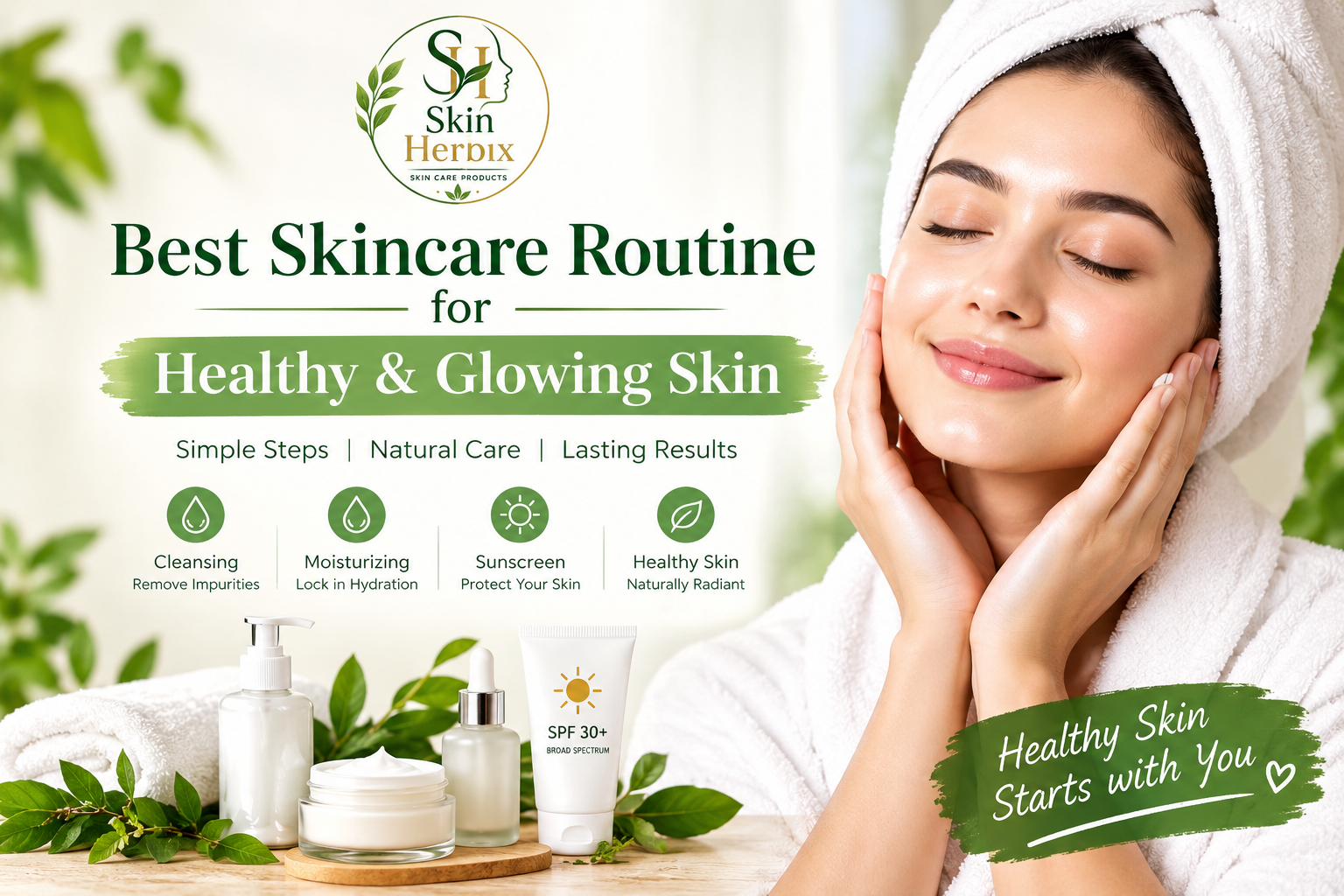
  • Best Skincare Routine for Healthy and Glowing Skin

    Best Skincare Routine for Healthy and Glowing Skin

    Healthy-looking skin does not require a complicated routine or dozens of products. What matters most is understanding your skin, choosing suitable products, and following a consistent routine. The Best Skincare Routine for Healthy & Glowing Skin starts with a few essential steps: gentle cleansing, proper moisturization, and daily sun protection. Once these basics are established, you can add targeted products according to your skin type and individual concerns.

    Whether your skin is oily, dry, combination, or sensitive, your routine should support your skin without leaving it feeling tight, irritated, or uncomfortable.

    Why a Simple Skincare Routine Works for Healthy Skin

    Skincare trends often encourage people to use multiple cleansers, exfoliants, serums, masks, and treatments. However, using more products does not necessarily mean healthier skin.

    A simple routine makes it easier to identify which products suit you and which ones may cause irritation. The basic approach is straightforward: cleanse your skin, moisturize it, and protect it from excessive sun exposure.

    Consistency is also important. Instead of frequently changing products, give your skin time to adjust and observe how it responds.

    The Best Skincare Routine for Healthy & Glowing Skin: Morning Steps

    A good morning routine helps cleanse your skin, maintain hydration, and protect it throughout the day.

    Gentle Cleansing for Healthy Skin

    Begin your morning with a mild cleanser suitable for your skin type. Cleansing helps remove excess oil, sweat, and buildup without unnecessarily stripping the skin.

    Use lukewarm water and massage the cleanser gently with your fingertips. Avoid harsh scrubbing because excessive friction can irritate the skin.

    If your face feels unusually tight or dry after cleansing, consider whether your cleanser is too harsh or whether you are washing your face too frequently.

    Hydrating Serum for Glowing Skin

    A serum is an optional step rather than a requirement for everyone.

    Choose a serum based on your main skincare concern. Hydrating ingredients may be useful when your skin feels dehydrated, while other formulations may target concerns such as dullness or uneven-looking skin tone.

    Introduce one active product at a time. This makes it easier to understand how your skin reacts and helps prevent unnecessary irritation.

    Moisturizer for Healthy, Hydrated Skin

    Moisturizing helps reduce water loss and keeps the skin feeling comfortable and hydrated.

    Apply moisturizer after cleansing and after any serum or treatment product. Even oily skin can benefit from moisturization. If you are prone to clogged pores, consider an oil-free or non-comedogenic formula.

    For dry skin, a richer cream may provide greater comfort than a lightweight lotion.

    Sunscreen for Daily Skin Protection

    Sunscreen is an essential part of a daytime skincare routine.

    Choose a broad-spectrum sunscreen with SPF 30 or higher. Apply it to exposed areas before going outdoors and reapply as directed, particularly after swimming or heavy sweating.

    Sun protection is not limited to sunscreen. Seeking shade and wearing protective clothing can also help reduce excessive UV exposure.

    Night Skincare Routine for Healthy & Glowing Skin

    Your nighttime routine is an opportunity to remove the day’s buildup and replenish moisture.

    Remove Makeup and Sunscreen Before Bed

    If you wear makeup or sunscreen, remove it before sleeping. Be especially gentle around the eye area and avoid vigorous rubbing.

    Gentle Cleansing for Healthy Skin

    Use a suitable cleanser to remove remaining makeup, sunscreen, oil, sweat, and daily buildup.

    Your skin does not need to feel extremely dry or “squeaky clean” after washing. If cleansing leaves your face feeling tight, your routine may need adjustment.

    Targeted Skincare Treatment for Your Skin Concerns

    A targeted treatment can be added when you have a specific concern, such as acne, uneven-looking skin tone, or visible signs of aging.

    Avoid introducing several strong active ingredients at the same time. Start gradually and pay attention to your skin’s response.

    Moisturizer for Overnight Skin Hydration

    Finish your nighttime routine with an appropriate moisturizer.

    If your skin is dry, applying moisturizer while the skin is slightly damp can help maintain hydration and improve comfort.

    Best Skincare Routine for Different Skin Types

    There is no single product combination that works perfectly for everyone. Your skin type and individual concerns should guide your product choices.

    Skincare Routine for Oily Skin

    Oily skin tends to produce more sebum and may be more prone to clogged pores.

    A simple routine can include:

    • A gentle cleanser
    • Lightweight moisturizer
    • Non-comedogenic products
    • Broad-spectrum sunscreen
    • A suitable targeted treatment when needed

    Avoid repeatedly washing your face to remove oil. Over-cleansing may leave your skin irritated.

    Skincare Routine for Dry Skin

    Dry skin may feel rough, tight, flaky, or uncomfortable.

    Focus on gentle cleansing and regular moisturization. Creams and ointments can provide more moisture than lightweight lotions and may be useful for particularly dry areas.

    Avoid very hot water and unnecessarily harsh cleansers.

    Skincare Routine for Combination Skin

    Combination skin may be oily in some areas and dry in others.

    Instead of treating your whole face in exactly the same way, pay attention to the needs of different areas. A gentle cleanser and balanced moisturizer can provide a useful foundation.

    Skincare Routine for Sensitive Skin

    Sensitive skin may react easily to certain ingredients, products, or environmental factors.

    Keep your routine simple and introduce new products gradually. If a product causes persistent burning, swelling, significant redness, or irritation, stop using it and seek professional advice when appropriate.

    Skincare Ingredients for Healthy & Glowing Skin

    Understanding common skincare ingredients can help you make more informed choices without following every new skincare trend.

    Hyaluronic Acid for Skin Hydration

    Hyaluronic acid is commonly found in hydrating skincare products. It can help support the skin’s moisture levels and improve the feel of dehydrated skin.

    Vitamin C for Brighter-Looking Skin

    Vitamin C is widely used in skincare products formulated to improve the appearance of dullness and uneven-looking skin tone.

    However, a vitamin C product should complement—not replace—daily sun protection.

    Moisturizing Ingredients for Healthy Skin

    Moisturizers contain different combinations of ingredients that help hydrate the skin and reduce moisture loss.

    Ingredients such as glycerin, hyaluronic acid, and occlusive ingredients may be useful depending on your skin type and the product formulation.

    For acne-prone skin, products labeled non-comedogenic or “won’t clog pores” may be preferable.

    Common Skincare Mistakes to Avoid

    Even a well-planned skincare routine can cause problems when products are used incorrectly.

    Avoid Over-Exfoliating Your Skin

    Exfoliation may be helpful for some people, but excessive exfoliation can leave the skin irritated, dry, or uncomfortable.

    If your skin becomes persistently red, unusually tight, or starts stinging when you apply basic products, consider simplifying your routine.

    Do Not Skip Daily Sunscreen

    A routine that includes serums and moisturizers but ignores sun protection is missing an important step.

    Regular UV exposure contributes to sunburn, premature skin aging, and skin cancer. Consistent sun protection is therefore an important part of everyday skin care.

    Avoid Scrubbing Your Skin Too Hard

    Healthy skin does not need aggressive scrubbing.

    Use gentle movements when cleansing and avoid rough facial scrubs if they leave your skin irritated.

    Introduce New Skincare Products Gradually

    Adding several new products at once makes it difficult to identify which product may be causing irritation.

    Introduce new products gradually and allow yourself time to observe your skin’s response.

    Give Your Skincare Routine Time to Work

    Skincare is generally a long-term habit rather than an overnight transformation.

    Consistency is more useful than constantly replacing products. Give a suitable routine enough time to assess how your skin responds, unless a product causes irritation.

    Healthy Lifestyle Habits for Glowing Skin

    A skincare routine is only one part of maintaining healthy-looking skin.

    Support your routine with everyday habits such as:

    • Protecting your skin from excessive sun exposure
    • Avoiding indoor tanning
    • Not smoking
    • Eating a balanced diet
    • Getting adequate sleep
    • Managing stress in healthy ways
    • Maintaining a consistent skincare routine

    For additional educational information about healthy skin habits, you can also explore resources from SkinWiseDaily.

    How Long Does a Skincare Routine Take to Show Results?

    There is no universal timeline for every skincare product or skin concern.

    Moisturizers may improve the feeling of dry skin relatively quickly, while products targeting concerns such as acne, uneven-looking skin tone, or visible signs of aging may require more consistent use.

    Avoid changing products every few days simply because you do not see immediate results. However, stop using a product if it causes persistent burning, swelling, or significant irritation.

    Frequently Asked Questions About Skincare Routines

    What Is the Best Skincare Routine for Healthy & Glowing Skin?

    A practical routine usually starts with gentle cleansing, moisturizing, and daily sun protection. You can add targeted products based on your skin type and specific concerns.

    How Many Skincare Products Do You Really Need?

    You do not need a large collection of products. A cleanser, moisturizer, and suitable sunscreen can provide the foundation of a simple daily routine. Additional products should have a clear purpose.

    Should You Moisturize Oily Skin?

    Yes. Oily skin can still benefit from appropriate hydration. If you are concerned about clogged pores, choose a lightweight, oil-free, or non-comedogenic moisturizer.

    What SPF Should You Use for Healthy Skin?

    For everyday sun protection, choose a broad-spectrum sunscreen with SPF 30 or higher. Follow the product’s application and reapplication instructions.

    Can You Use Several Active Skincare Ingredients Together?

    It depends on the ingredients and your skin’s tolerance. Combining several strong products can increase the risk of irritation, so introduce active ingredients gradually.

    What Should You Do If Your Skincare Routine Causes Irritation?

    Stop using the product that appears to be causing the reaction and simplify your routine. If irritation is severe or persistent, or if swelling occurs, consult a qualified dermatologist or healthcare professional.

    Build Your Best Skincare Routine With SkinHerbix

    The Best Skincare Routine for Healthy & Glowing Skin does not need to be complicated. The most useful routine is one that matches your skin’s needs and is simple enough to follow consistently.

    Start with the essentials: cleanse gently, moisturize appropriately, and protect your skin from UV exposure. If you need additional support for a specific concern, introduce targeted products carefully and one at a time.

    At SkinHerbix, we believe skincare should be simple, intentional, and focused on maintaining healthy-looking skin rather than following every passing trend.

    Explore SkinHerbix and discover skincare products to support your everyday routine.